

The short version:
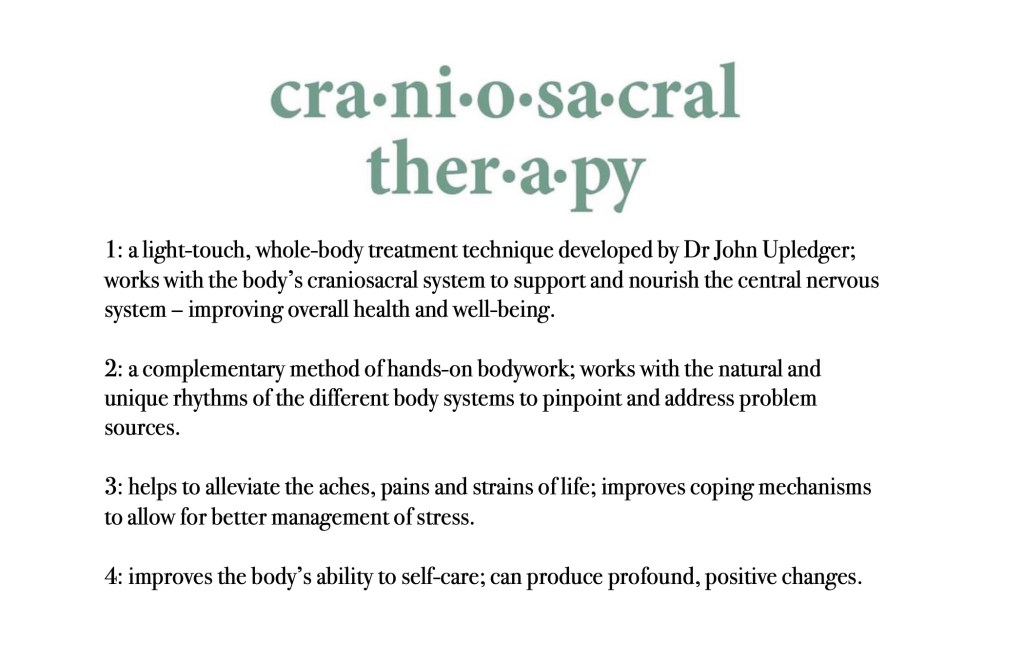
Research papers of Craniosacral Therapy
The long version:
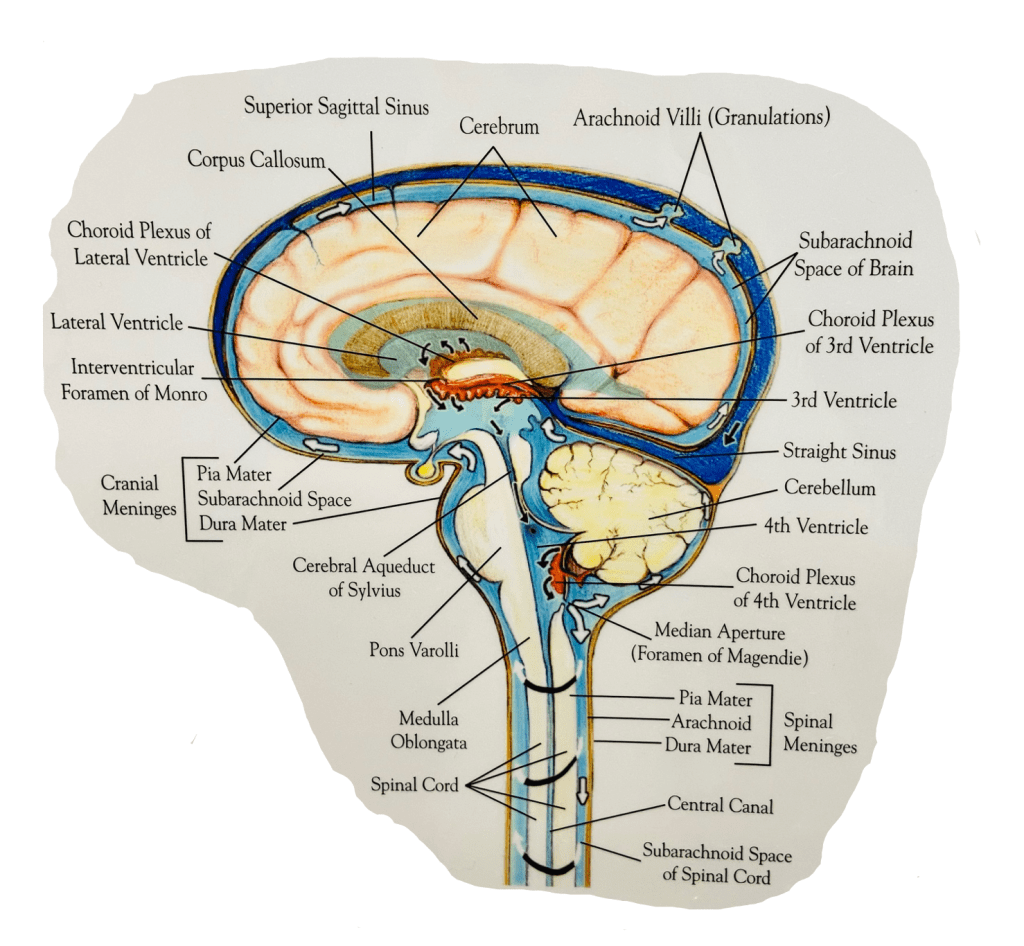
Craniosacral therapy is not well known in Australia, so firstly, let me introduce you to your craniosacral system (CSS) if you haven’t heard of it. Your CSS is what houses your spinal cord and Brain. It is made up of the three-layered membrane system that we call the meninges; cerebrospinal fluid and the structures within the membrane system that control fluid input, outflow & pressure of the system. It is the semi closed hydraulic system that houses your brain and spinal cord. The outer soft but tough membrane of your CSS is called the dura mater. The dura mater is responsible for retaining the cerebrospinal fluid around your brain and spine. There is a delicate rhythm and the fluid pressure is finely tuned which causes cerebral spinal fluid to move optimally around your spinal cord and brain delivering precious nutrients, removing harmful waste and regulating temperature. This palpable rhythm is as essential, measurable and tangible as your breath and heart rate and is at the core of your physiology. It is this rhythm that craniosacral therapists use as a diagnostic tool.
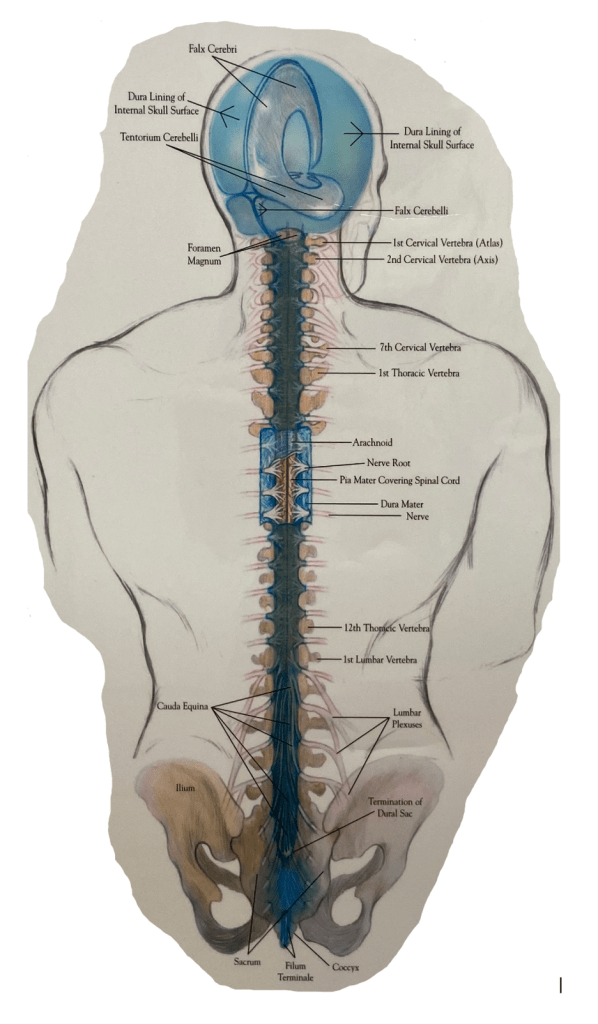
The rhythm of your craniosacral system can be felt anywhere on the surface of your body as the ripple effect travels outward. This is just like the ripple effect seen in a pond when a pebble is dropped in. This rhythm is measured in rate, amplitude, symmetry and quality by the therapist. As this ripple travels outwards through the many different layers of tissue in your body it can meet barriers and resistance, just as the ripple from the pebble may meet when it comes to a twig or rock in the pond. A craniosacral therapist’s role is to detect and work with the body to rectify abnormal bone movement, barriers and resistance in the soft tissue, whether they are deep or superficial in your body. This is achieved using various, gentle, hands-on techniques to allow this rhythm to function optimally.
Your skull is made up of 22 bones – staggering right!!… All of these bones and the bones in the rest of your body, 206 in total, move slightly and in a specific plane to the rhythm of your craniosacral system when it is functioning optimally. In particular, when the bones in your head do not move in sync with this rhythm, it can cause many knock-on effects, such as headaches, migraines, hearing or vision issues to name but a few.
A cross section view of your brain & meninges
The craniosacral system has a powerful influence over the nervous, endocrine and immune systems. The pituitary and pineal glands are located within the craniosacral system. Any distortion within this area of the craniosacral system can impact the function of these two glands. There are 31 spinal nerves and 12 cranial nerves within your body. Your spinal nerves pass through the dura mater. If there is tension in the dura mater it can restrict nerve conduction or irritate your nerve(s). Given your nervous system plays a major role in controlling your muscles and organs this restriction could have a wide range of effects. Imagine a mouse nibbling on the wiring in your electric box on the outside of your house causing the light in your kitchen on the other side of the house to fail. You can change the bulb in that light as many times as you want but the light is still not going to work. Even the slightest distortion of the messages traveling through your nervous system to and from your brain can have major implications. Craniosacral therapy can help the body to re-establish unobstructed messages through the nervous system.
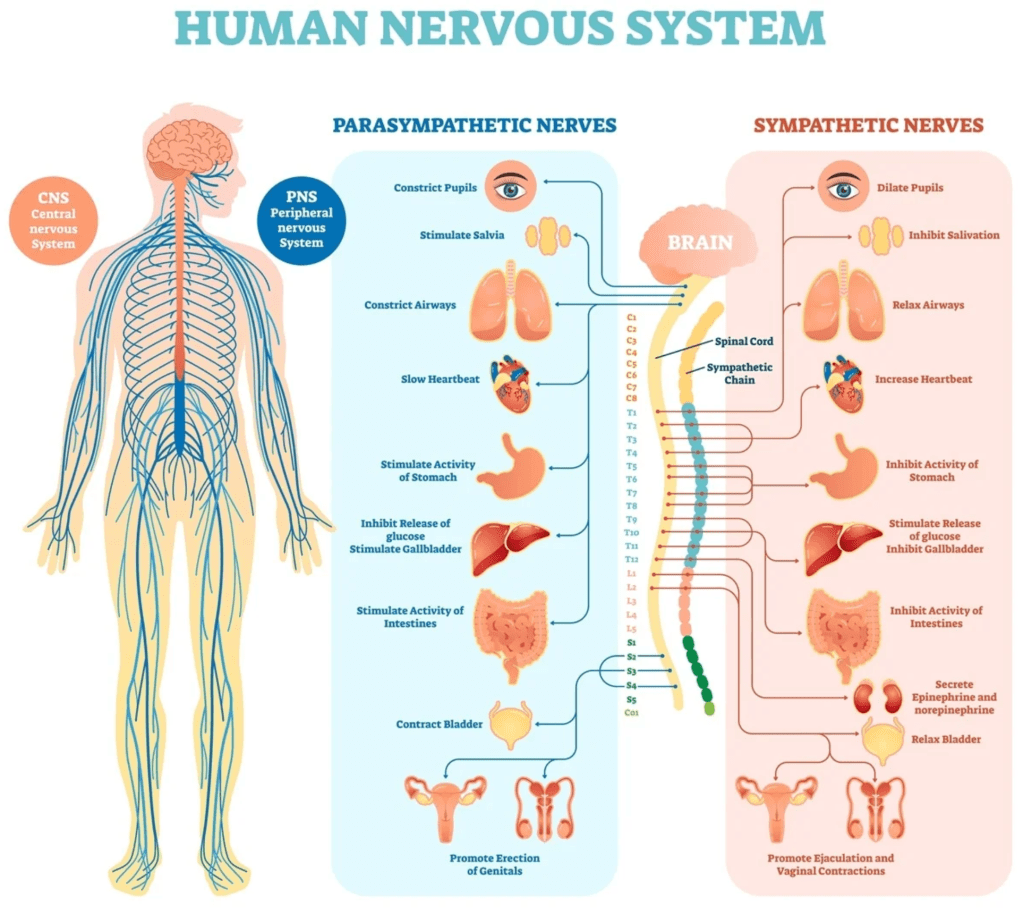
Stress & Trauma are held within our memory as well as the tissues of our body and in particular our nervous system. Over the last few years as I have been studying and practicing craniosacral therapy (CST) I feel it is the release of this stress and trauma from the body’s nervous system that has created the greatest positive effect for the clients I have treated. CST gives the body the opportunity to acknowledge this stress and trauma and let go of all or part of it, whatever the body is ready to let go of. This is where my journey with CST will begin. Most of us, or likely all of us, have stress and trauma held in our bodies which our bodies, acknowledgement and treatment of which could bring significant benefits. An incident that may have been fairly minor at the time, and potentially rarely thought of again, can become a great burden for our body to hold over time. If the fight-or-flight instinct in our nervous system isn’t thoroughly brought back to rest-and-digest, we can be caught in a constant state of being alert and alarmed and never truly allow our bodies the time to relax and restore. In this perpetual state of fight or flight, our brain points the finger at our bodies for breaking down when, really, the brain should be taking the responsibility for losing connection with what the body has been desperately trying to communicate.
There are many ways over the millennia that humans have found to release the stress and trauma from their bodies. I truly believe that this is a critical in being able to have a body that feels comfortable to live in and, hence, why I have chosen to go down this particular path with my career and studies. My craniosacral studies will likely last many years, given the depth of this field of therapy, but for now it starts with helping clients who need support with either the down-regulating of their nervous system to assist with stress and anxiety or the regular occurrence of headaches and migraines.
Visit the testimonial page to read some feedback from a few of the clients I have been treating with craniosacral therapy. You are welcome to either book in for a full session of craniosacral therapy or a combined massage and craniosacral therapy treatment. If you’re unsure which suits your needs best we can discuss this at the beginning of your appointment. Craniosacral therapy is conducted with the client laying fully clothed on the massage treatment table. When craniosacral therapy is done during a remedial massage therapy treatment the two modalities are intertwined during the duration of the session.
 Amanda Fincham - Craniosacral & Remedial Massage therapy